Fire Emblem: Fortune's Weave Review - Far From Beginniner's Luck
If any of you are like me (and I know there are many in this position), then you got on board with the Fire Emblem IP with the launch of 2013’s Fire Emblem: Awakening. The 3DS release was a perfect balance of the hardcore systems that had made the franchise an adored cult classic, and a layer of accessibility that made the game approachable to newcomers. Pair these systemic improvements with a cast of characters that haven’t been bettered by a game that came before it, nor one released since, and you had a transformative title for the franchise’s fortunes. Since Awakening, Fire Emblem has exploded, reaching another extraordinary peak with the Nintendo Switch title Fire Emblem: Three Houses, which blended heightened relationship management akin to a Persona game. When 2023’s Fire Emblem: Engage dialled back many of these relationship management elements, pockets of the Fire Emblem fanbase erupted, and the tug of war between priorities led to this moment: the impending launch of Fire Emblem: Fortune’s Weave, a game that attempts to strike the balance between the new and the old, and does so to an exceptionally high level.
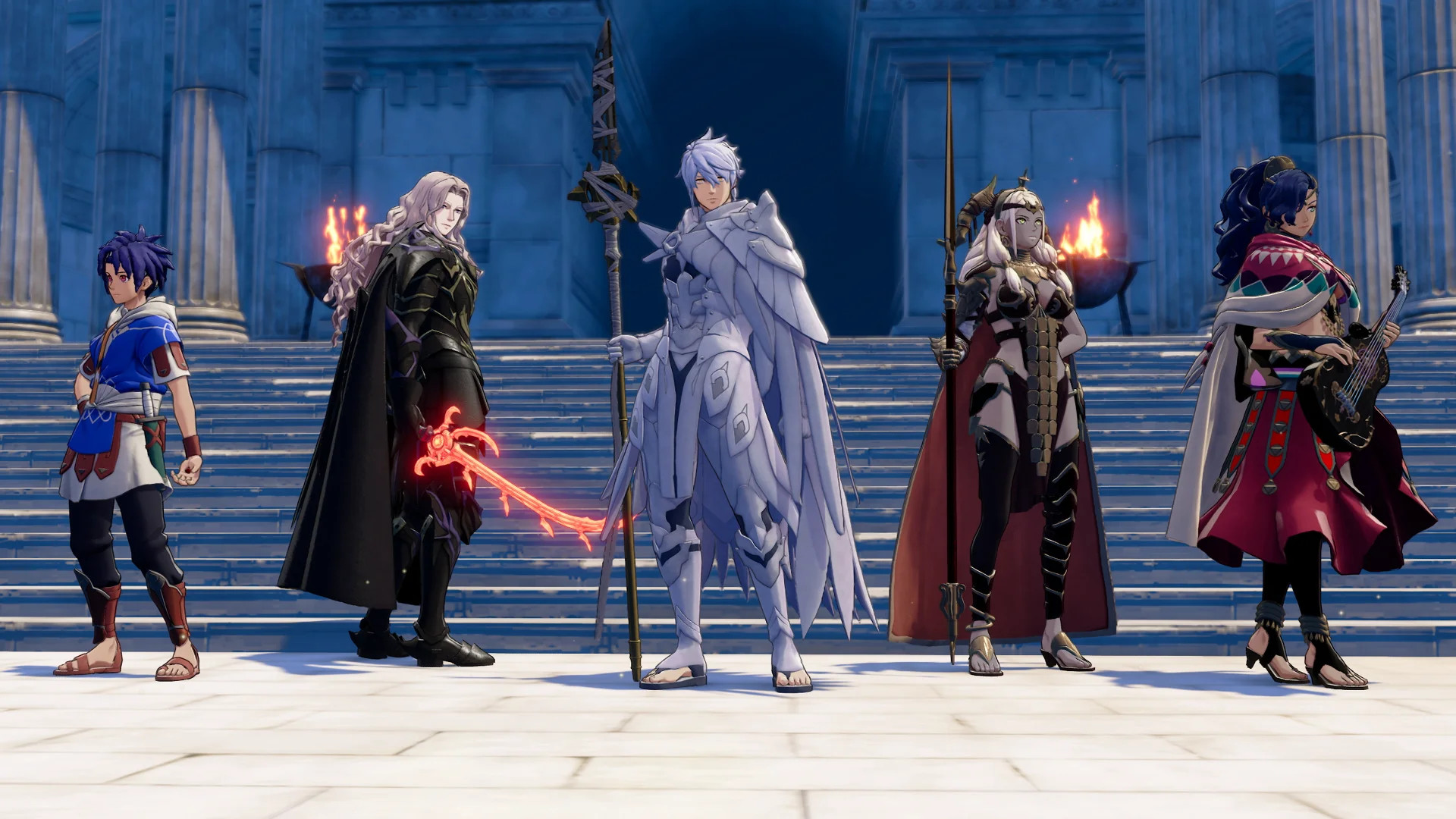
In the realm of Dagda, the capital Dagsion hosts what is known as the Heroic Games, an event that draws in the greatest warriors from across the world to compete for glory and the opportunity to request a single wish that will be granted to the winner. Beneath all of the festivities of the Heroic Games, there is an evil presence lurking on the periphery, threatening to unravel everything in Dagda. Players will have four core narratives to pursue, and unlike Three Houses, where you must choose one and see it through to its completion before beginning a secondary or tertiary playthrough to see all sides, Fortune’s Weave allows the player to switch between any of the four lead protagonists, Leda, Theodora, Dietrich, and Cai, at any time, as their stories diverge and converge as the events of the broader narrative play out. Where Three Houses’ narrative worked in standalone vertical slices, experiencing the fullest from Fortune’s Weave requires you to experience each of the stories. You’ll see different elements of the plot and see shared moments from a range of different perspectives, helping to consolidate and amplify the significance of the game’s hardest-hitting moments. There are moments of levity to balance out some of the darkest elements of the plot, and a lot of fun to be had along the way.
Importantly, the social systems of Three Houses, which I must admit, wore me down to a point of burnout when I played the 2019 Switch title, have been retooled perfectly for Fortune’s Weave. While there are plenty of reasons to engage with the community (more on that in a moment), the need to wine and dine people, gift them endless presents, and cater to their every beg and whim isn’t so excessive in this new title, making the prospect of recruiting your dream team feel very manageable, but not easy at the same time.
Each of the four Flame Lords possesses their own unique systems that allow them to interact with the world in different ways. From Leda’s performances at taverns across the world to Cai and his eagerness to do good deeds for the citizens of the world, each of these actions helps to build the renown of the character, which then supports the social pillars of the game, which you can then leverage to recruit new people to your squad. As your party grows, your ability to navigate combat encounters expands, from the sheer firepower available to you to the diverse skill sets that each member contains, paired with the very familiar pathways of evolving your character’s class as they continue to level up.
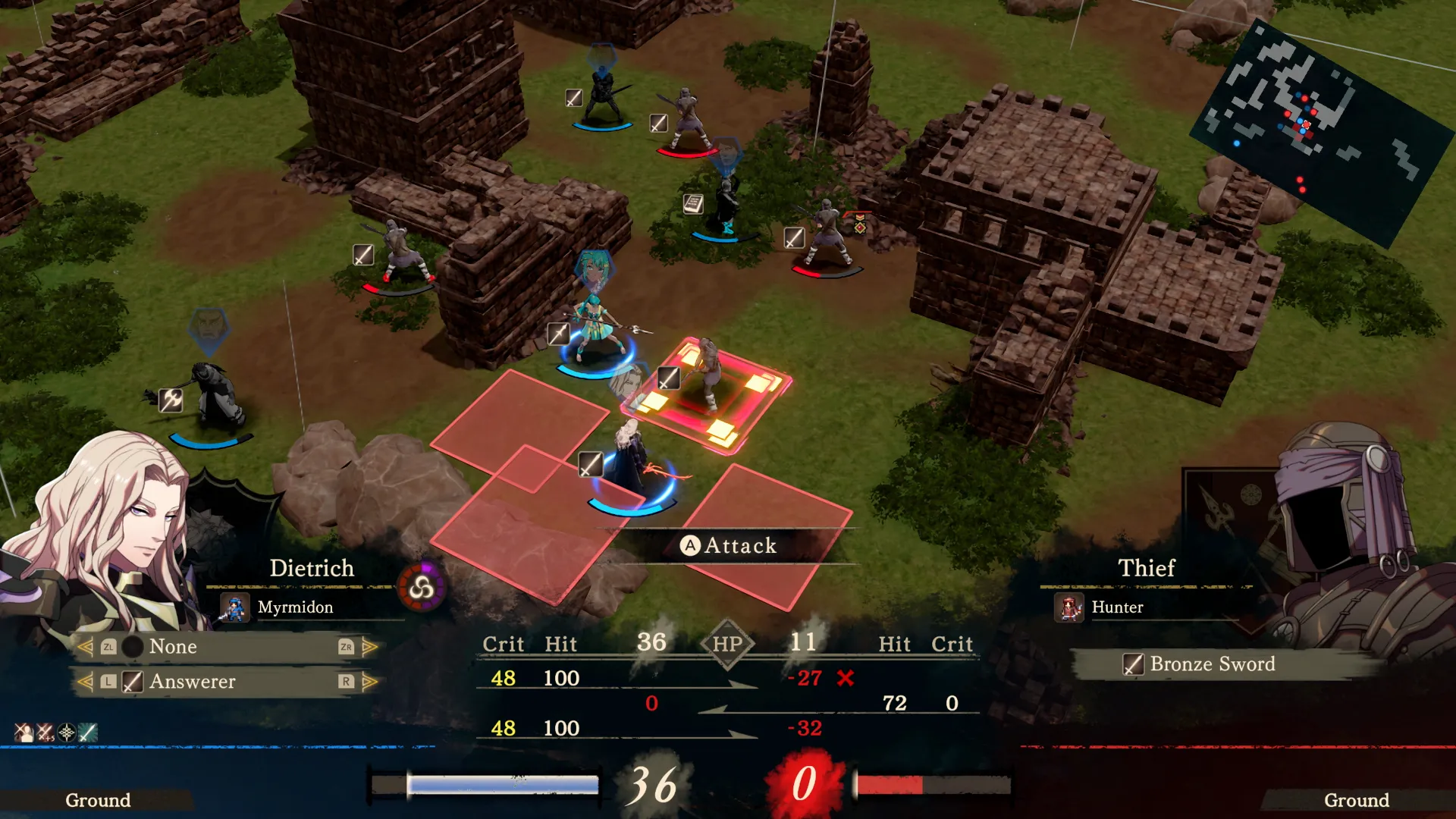
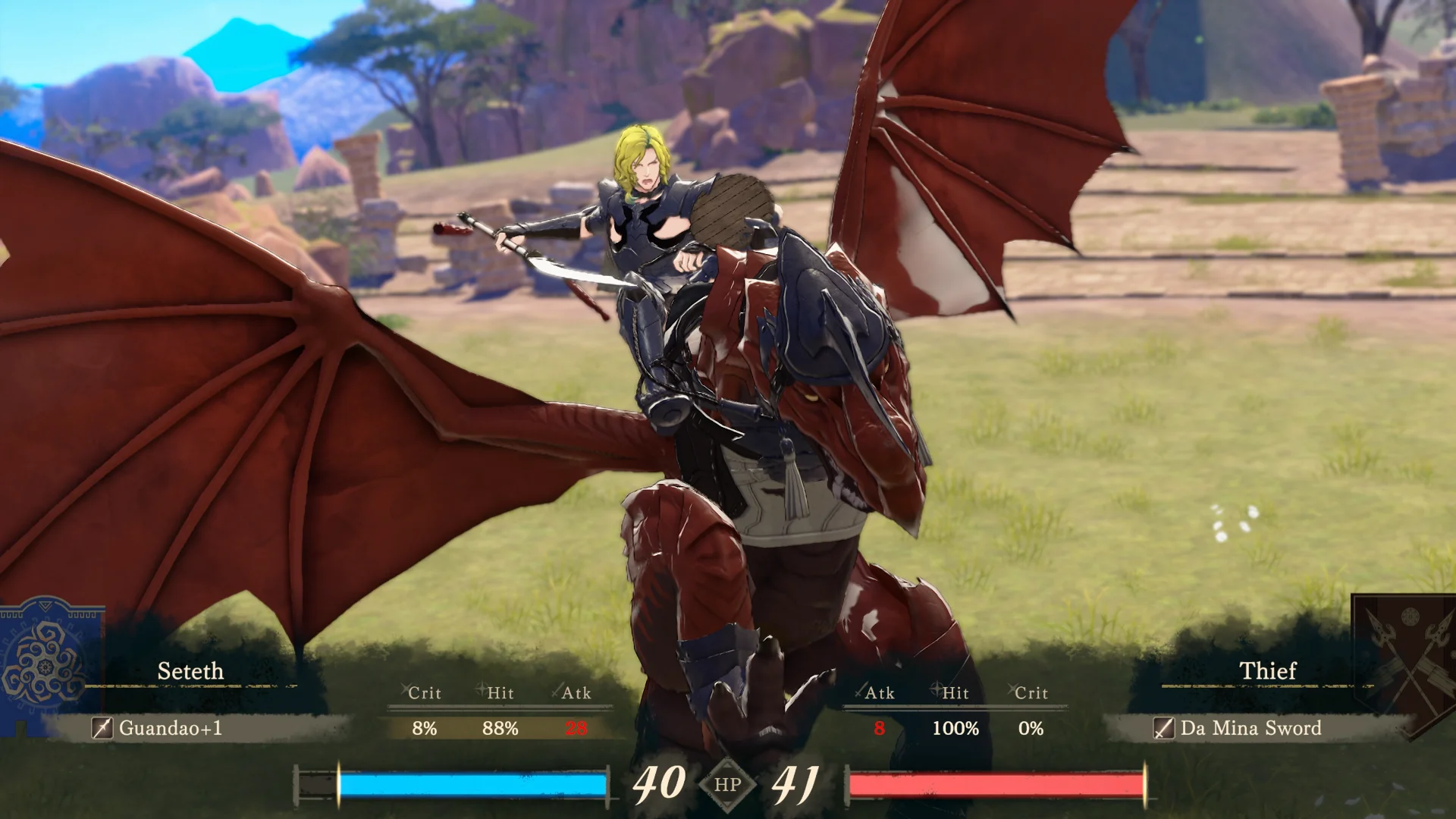
While the social systems of Three Houses were essentially removed in Engage, one thing that Intelligent Systems nailed with the 2023 title was the combat. Now, the weapon triangle is sadly still missing here in Fortune’s Weave, as it was with Engage, and so if that’s a deal-breaker, then I sadly don’t have anything else to say here that will win you over. If you’ve successfully overcome that significant change introduced in the last title, then you’ll be able to really enjoy the added polish and refinement to that system of combat found in Fortune’s Weave. This new title introduces a feature known as Blaze Arts, a skill available to a select few playable characters, in part because the skills are unique to the user, but also because they do have the potential to make a combat encounter suddenly a breeze. There’s a risk associated with their use, meaning that you cannot repeatedly utilise Dietrich’s teleport ability, or Theodora’s ability to toss pieces of earth at opponents, without paying a price to your health. The considered strategists among you, though, will no doubt be able to weaponise the strengths of the Blaze Arts without leaving yourselves too vulnerable at the same time. If you overdo the use of your Blaze Arts, you will trigger a state of Overblaze, where the stats linked to your Blaze Art are boosted through the roof, but your health significantly deteriorates. Early in the game, the Blaze Arts and Overblaze could be easily exploited, but as the game progresses, I found the intended risk/reward of the system to become increasingly prominent, requiring me to be more considered in my use of the skills.
Beyond the standard fare, players can traverse the overworld and enter a range of dungeons where the camera pulls in to a more traditional action RPG perspective. In these scenarios, the player can navigate the dungeon and engage in traditional turn-based encounters. While there’s not a lot of depth here, and the game provides you with the means to both fast-forward and even skip these encounters completely, I found them to be an excellent change of face to the normal Fire Emblem combat loop.
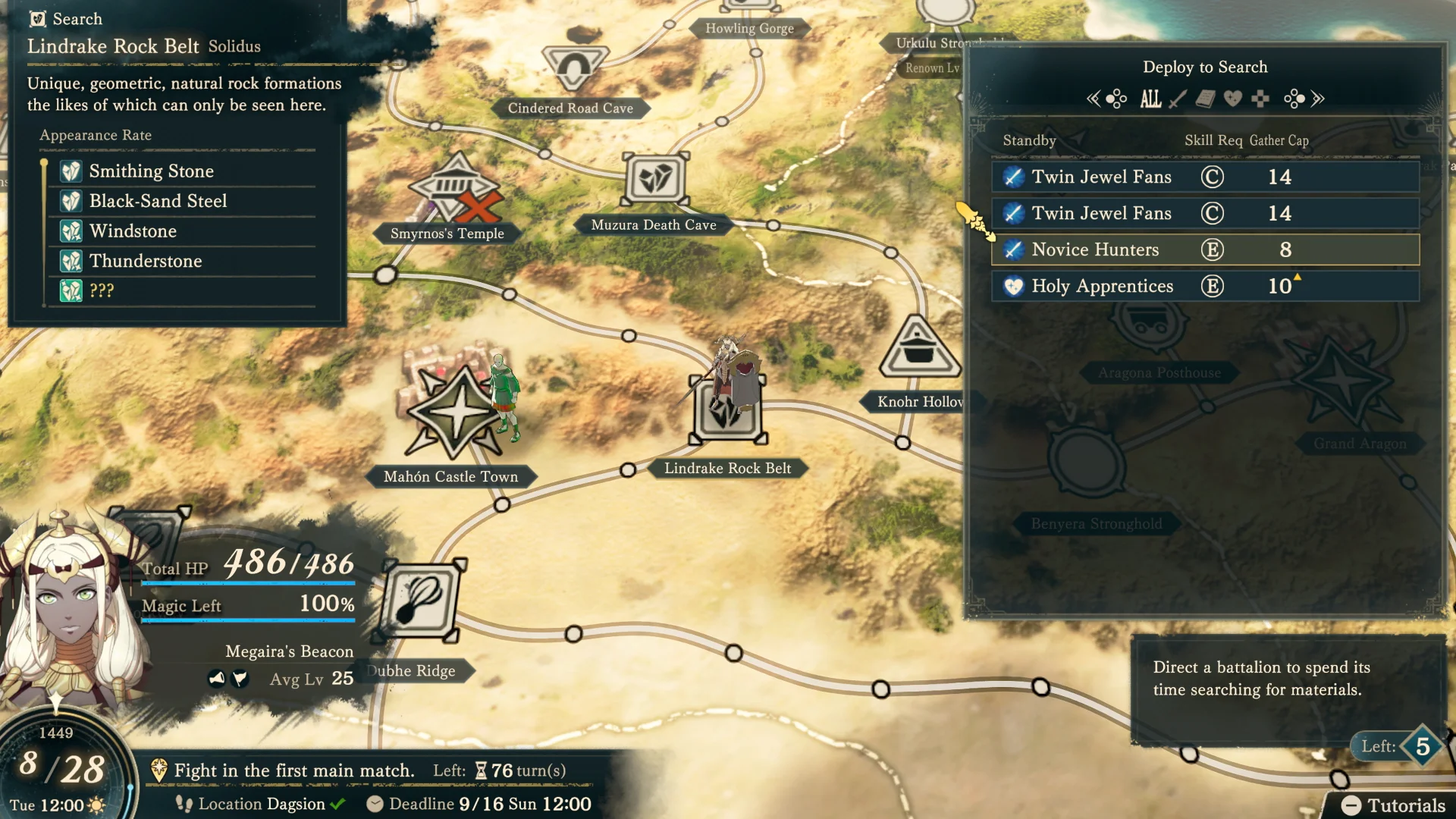
Between the social sim elements, the traditional Fire Emblem combat loop, and the new dungeon exploration, there’s much more present here in Fire Emblem: Fortune’s Weave to keep the experience fresh. Before kicking off a new chapter in the game, you will have a predetermined number of days available to you, some of which are burned through each of the following systems, as well as in your travel around the world. Optimising your time is of great importance if you wish to be combat-ready for whatever the game tosses at you next.


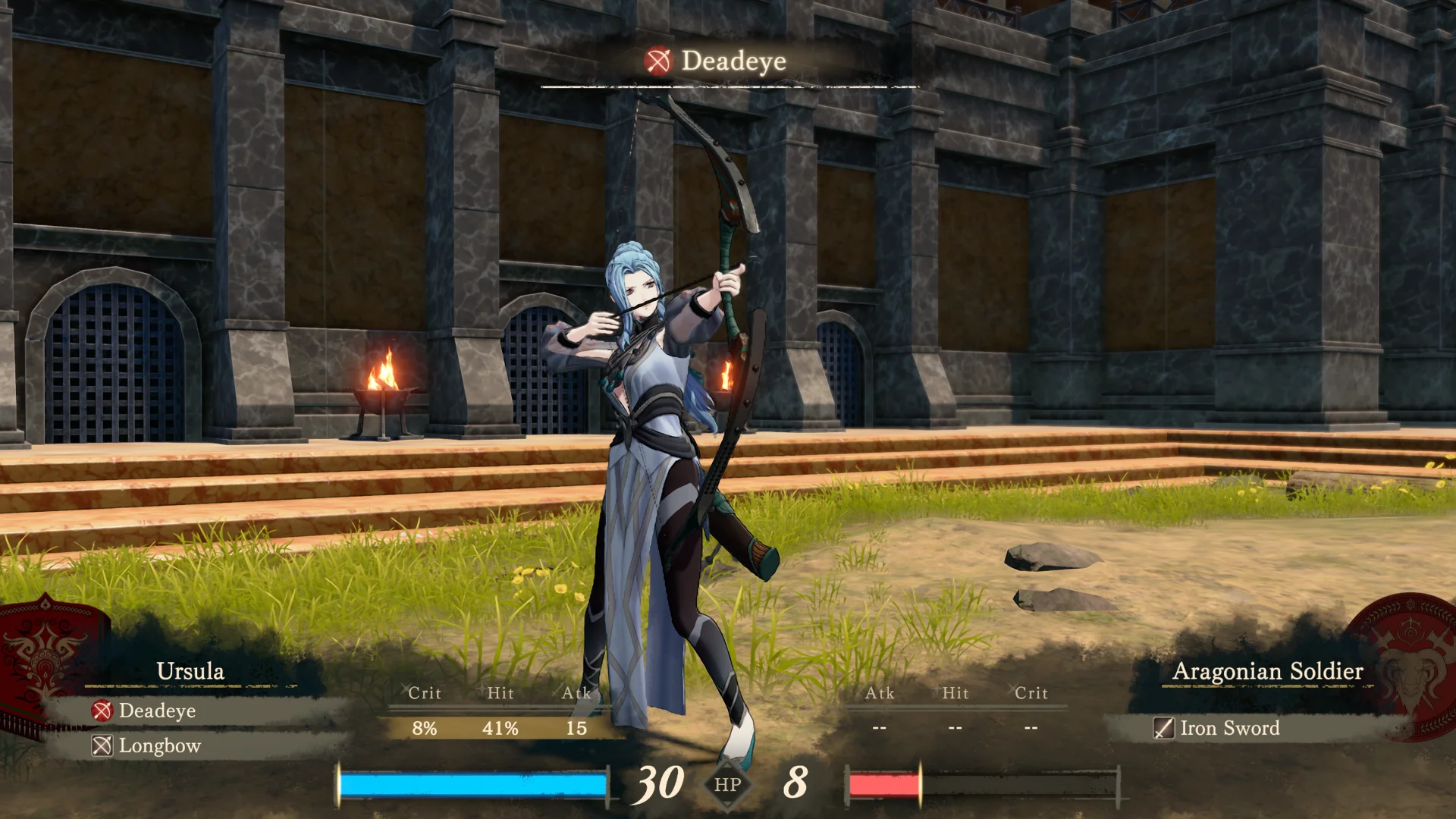
Fire Emblem: Fortune’s Weave is a gorgeous-looking game for the most part. Certainly, some textures in the environment can leave a little to be desired. Still, what the game is constantly trying to draw your eye towards – the characters, the cityscapes, and the focus points of each region – look fantastic. The game’s voice-acting is excellent, and while there are a few characters who fit some stereotypical tropes, I was impressed by how the actors who portray these characters managed to inject the right amount of personality into their performance to make these characters feel greater than the sum of their parts. The soundtrack of the game is blissful to tune in to. On more occasions than I’d like to admit, given the 100+ hours I’ve put into the game already, I found myself just standing still, listening to the music, not pushing on, but just letting it all wash over me. That’s when you know you’ve got something special, but the game’s score also meets the more intense action or dramatic moments of the narrative with strength as well.
Fire Emblem: Fortune’s Weave is the closest game to a Fire Emblem: Awakening competitor we’ve seen. There’s a nostalgia tied to Awakening that might be hard to overcome for some, but it is inarguable that the evolution we’ve seen in the franchise through multiple subsequent entries has coalesced into a near-perfect whole in Fortune’s Weave. This is modern Fire Emblem, mastered.

Fire Emblem: Fortune’s Weave was reviewed on a Nintendo Switch 2 with a code kindly provided by Nintendo Australia.