Iron Nest Review – Geneva Suggestions
Every now and again you’ll witness something in gaming that births a genre. It may not be the first, but it will be the most influential. From there, pins will fall in decently quick succession as new games come out to capitalise on the hype from the parent game. Whilst I was waiting for PVKK, I’ve been hungry for something that would fill the void that I didn’t even know I had in my heart for some heavy artillery firing fun.
Iron Nest is that game. Set in an alternate-historical Spain, you take the place of a heavy artillery operator in the so called Iron Nest, a moving artillery on the outskirts of every skirmish. You live in the artillery, and your entire mission is to do what mission control tells you to do. Deviating from the task is tantamount to sedition, so you’d best keep your head in line.
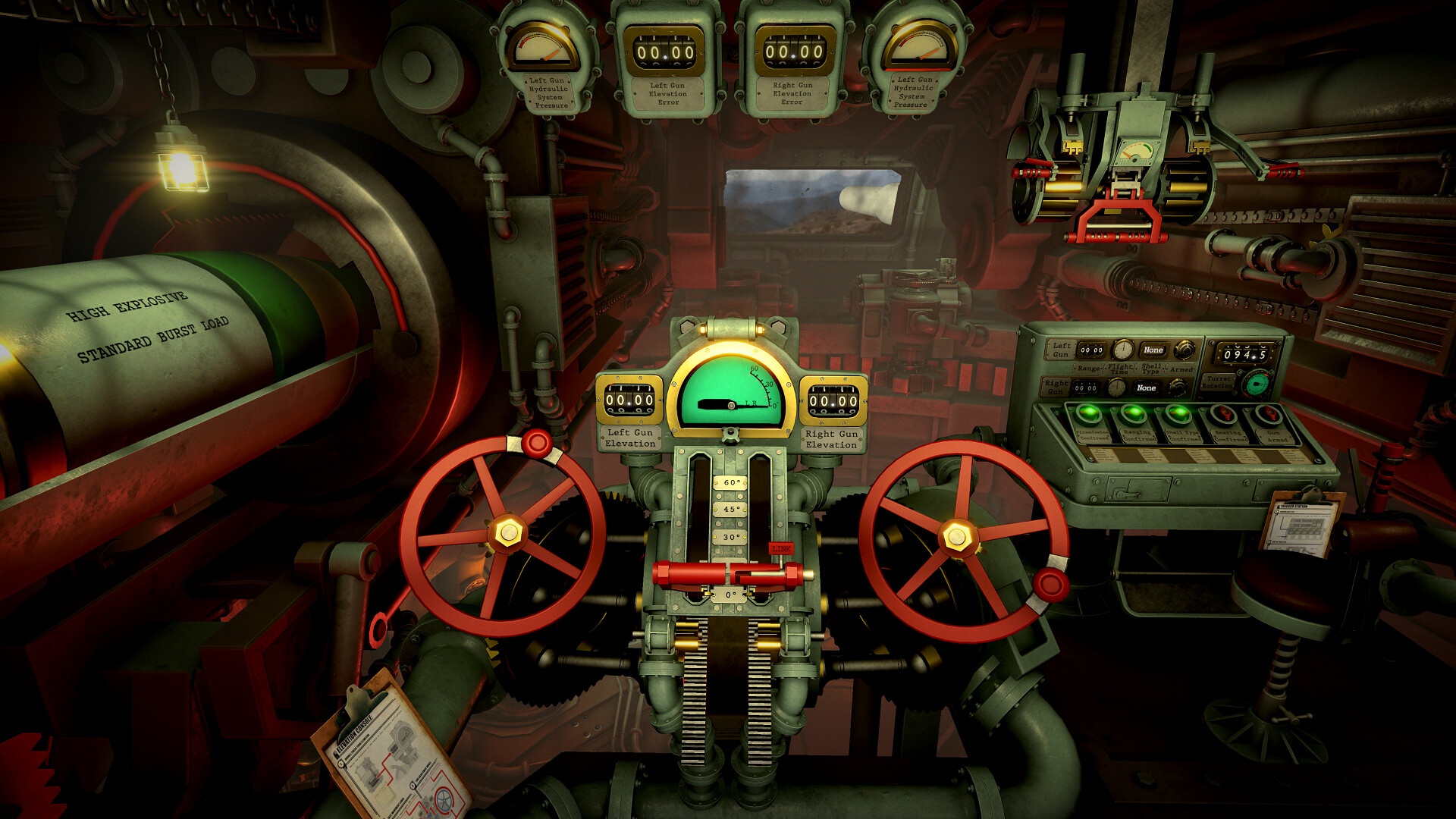
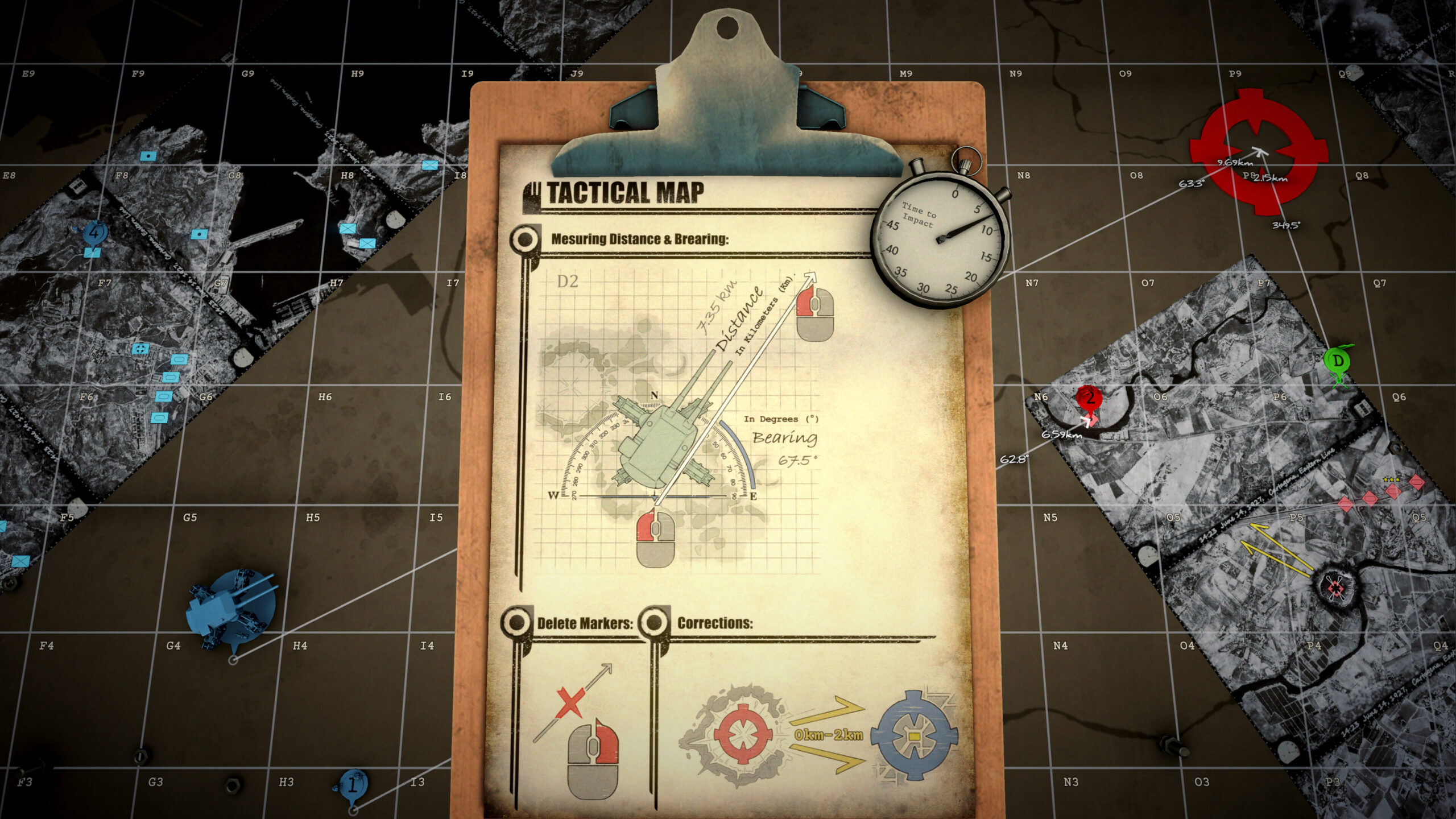
Firing the artillery comes down to a few things, the first of which getting the rough area of a target by using the clues given. Sometimes, that will be distance from a spotter, or rough angle from the Iron Nest, or a combination of those clues. Other times, with moving targets it will be speed they are travelling at and direction, and you’ll need to time shots accordingly. Secondly, mission control may give you criteria, maybe enemies are underground and will need specific shots, or they’ll be clustered so you may wish to use a larger payload shell. Either way, you’ll have the basic info you need. From there, you use the battlefield table to calculate distance and cardinal direction from the Nest, and input this information into a firing computer. This will give you the angle for the turret, as well as how many powder kegs are needed to allow the shell to make the distance. You can also calculate this manually, which is what I end up doing after the first few missions, because it made me feel cool and because I am lazy. You then prime the shell and relevant powder charges, and load it into the cannon. You’re not done yet though, oh no. You then spin the Nest to aim in the proper direction, and tilt the cannon to have the right angle. From go to whoa, just the firing process takes a minute. It’s a very slow, methodical process and you still need to wait a good thirty seconds for things to go down.
That seems like a long time, but if you get it wrong it feels much longer. Feedback isn’t immediate, so messing up might mean you need to start from scratch. In the thick of combat, where you’re bulk calculating multiple shells, prepping both turrets and firing, things get extremely intense. Many of the missions do not give you a break at all, and whilst the formula might seem simple, the developers play with it in fun ways so no mission feels the same.
Performing a successful shot means you’ll be rewarded with requisition points, which are used to buy more shells. I did find that I ignored most of them, sticking to the same few tried-and-true goodies. Better players than I might do some really quirky strategies with different shells, but I got by just fine. The other unlockable is vinyls, which allow you to play appropriately patriotic sounding music over the Nest’s loudspeaker. I loved these, personally, and was always excited to hear a new one. The soundtrack will be one I’ll be looking out for.


The interesting thing for me was that whilst it’s discouraged to hit friendly targets, you can get away with a few without repercussion. There’s a subtle narrative there about civilian casualties in war, but unless you’re going hog wild on civvies, the only real disadvantage will be some requisition loss and (sometimes) not fulfilling the gold medal conditions for a mission. These medals range from speed, to accuracy and requisition used. They’re fun optional objectives, but unfortunately you don’t see them until after the mission is done, so getting them is usually completely accidental.
Whilst the war does feel like it’s raging on, I was a little disappointed that it never really felt like me doing a great job made a difference. Maybe I saved a squad of troops from being pinned down, or took out some extra priority targets, like munitions depots outside the scope of the mission. It never made a real difference. The final mission is the only one where it feels like you have any agency at all, and even then it’s just a clipping in a newspaper. Maybe that’s the narrative though, that a single soldier is just a cog in the military machine and is unlikely to make any shift in momentum.
Iron Nest is a fun game. I think you’ll know instantly if this game is for you or not. For me, I had a great time. Everything feels tactile and pulling all the levers and valves is fun. Despite it not affecting the narrative, performing well makes you feel like a badass. It’s hard to argue with dopamine.

Iron Nest was reviewed on PC with a code kindly provided by the publisher.